

Aug 10 2026
Hidden braces sound appealing—until you realize they’re sitting exactly where your tongue goes when you talk.
So it’s reasonable to wonder: Will people hear my braces even if they can’t see them?
Lingual braces can temporarily affect speech. Some people notice a slight lisp, altered pronunciation, or that certain sounds feel less natural soon after treatment begins. Others notice much less.
Why? Your tongue already has a highly practiced “map” for creating speech. Putting an appliance behind the teeth changes part of that familiar surface, and your tongue has to adjust.
The reassuring part is that speech adaptation is expected—but there isn’t one timeline that applies to everyone. Research on lingual appliances shows both early speech changes and considerable variation between patients.
Do Lingual Braces Affect Speech and What Changes Might You Notice?
The change usually isn’t that you suddenly “can’t talk.”
It’s more subtle.
You might feel that words aren’t coming out as sharply as usual, hear a slight lisp, or find yourself repeating a word because one sound didn’t feel quite right.
Do Lingual Braces Affect Speech by Causing a Lisp?
They can, but not everyone develops one.
A lisp is commonly associated with changes in sounds such as “S” and “Z.” Because lingual braces occupy space directly behind the teeth, the tongue may initially form these sounds differently.
Research comparing customized and prefabricated lingual brackets consistently identifies speech disturbance as a possible early effect of lingual appliances, while also showing that the degree of change varies by patient and appliance design.
If your teenager is worried about sounding different at school, be upfront: lingual braces can affect speech during the adjustment period, including a temporary lisp.
Which Sounds May Be Harder to Pronounce?
The sounds most likely to feel unfamiliar are often those that depend on precise tongue placement near the front teeth and palate.
| Sounds: What You Might Notice | |
| S / Z | A slight lisp or change in sharpness |
| T / D | Words may briefly feel less crisp |
| SH | Airflow may sound or feel different |
| L / R | Some people may notice changes in tongue placement |
A systematic review of speech and orthodontic appliances identified sounds including S, Z, T, D, L, R, and “SH” as potentially affected by orthodontic appliances.
Why and How Do Lingual Braces Affect Speech?
Here’s the part that’s often missing from the simple answer, “because the braces are behind your teeth.”
Speech depends on incredibly precise movements happening inside your mouth—often without you thinking about them.
How Your Tongue Uses the Teeth and Palate to Form Sounds
When you speak, your tongue repeatedly touches or approaches the teeth and the roof of your mouth to control airflow.
For an “S” or “Z,” your tongue helps create a narrow pathway that directs air near the front teeth. Sounds such as “T” and “D” depend on brief, precise tongue contact near the area behind the upper front teeth, while sounds such as “L” also rely on controlled tongue-tip placement.
You’ve repeated these movements thousands of times, so they’re largely automatic.
Your tongue knows where everything is.
What Changes When Braces Sit Behind Your Teeth
Then lingual braces arrive.
Suddenly, part of that familiar surface has changed.
The tongue has slightly less unrestricted space, feels a new texture behind the teeth, and may change where it makes contact while speaking.
One prospective study of oral comfort, function, and speech with lingual brackets found changes involving tongue space, tongue position, and articulation after appliance placement, with adaptation occurring over time for several measures.
Think of it less as your speech being “damaged” and more as your tongue having to relearn its route around new furniture in a familiar room.
Why Sounds Like “S” Can Be More Noticeably Affected
“S” is particularly sensitive because it requires very precise tongue position and airflow near the front teeth.
A randomized study evaluating S-sound performance with lingual appliances found measurable changes in the “S” sound after appliance placement, with changes improving over time.
A small change in that space can change how the air escapes—and therefore how the sound comes out.
That’s why you may hear a slightly softer, less sharp, or lisp-like “S” before other people notice changes elsewhere in your speech.
Will Other People Notice a Change in Your Speech?
Maybe. But what feels dramatic inside your own mouth isn’t necessarily identical to what everyone else hears.
What You Notice vs. What Other People May Hear
After braces are placed, you become extremely aware of your tongue.
A teenager may think every “S” sounds strange in class. An adult may become conscious of every word on a client call. A teacher, salesperson, attorney, or presenter may notice tiny differences they never would have noticed before treatment.
Research on speech performance in lingual orthodontic patients has assessed lingual-brace speech from several perspectives—including patient self-assessment, objective acoustic measures, and listener assessments—which matters because those measures aren’t always the same.
So we shouldn’t tell you, “Nobody will notice.”
Instead:
You may notice the change more intensely because you can feel it as well as hear it.
If you have an important interview, performance, presentation, wedding, or speaking engagement coming up, tell your orthodontist. Treatment timing may be worth discussing.
How Much Can Lingual Braces Affect Your Speech, and How Long Does It Last?
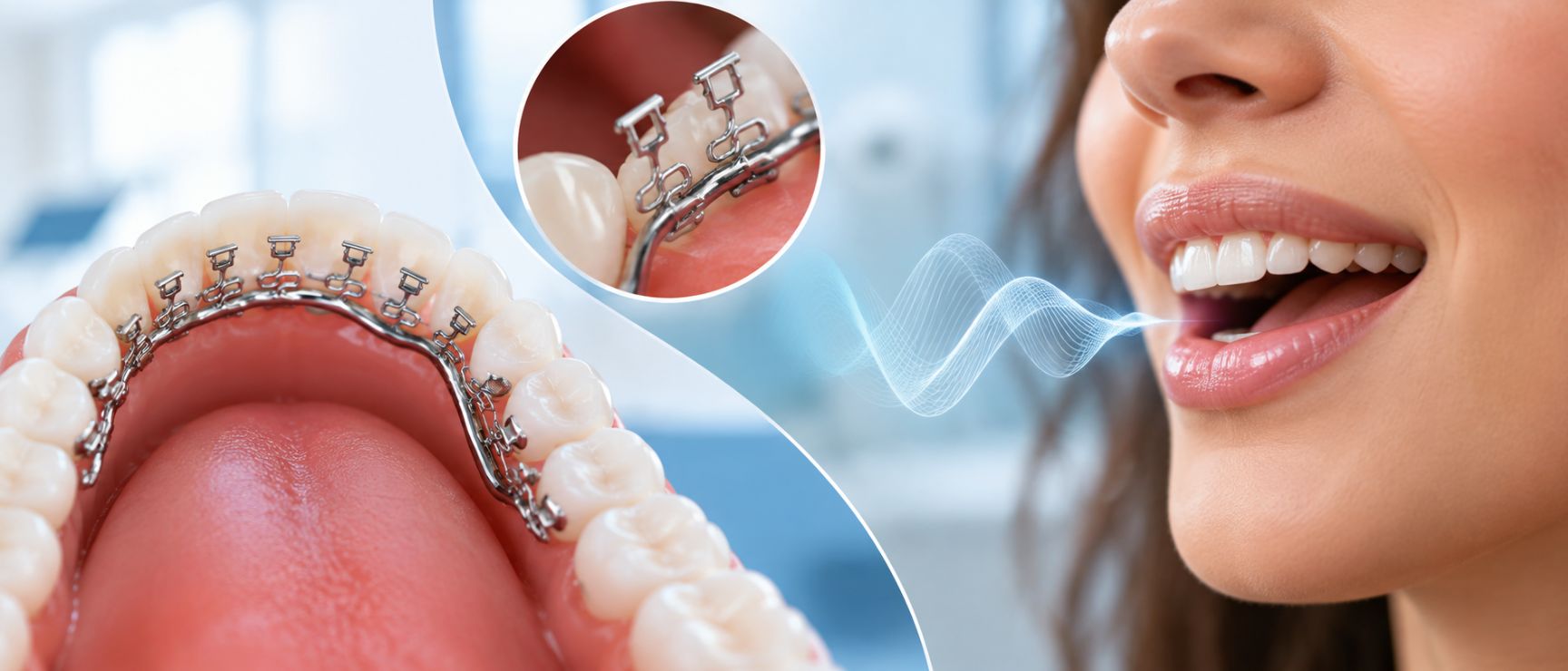
This is where overly confident answers like “exactly seven days” become misleading.
But it helps to have a sense of scale before getting into why it varies. Speech changes can range from subtle differences in specific sounds—particularly sounds such as “S”—to a more noticeable temporary lisp or greater awareness of tongue interference while speaking. The degree of change varies considerably from person to person, and experiencing a speech change doesn’t mean you’ve lost the ability to communicate normally.
Why Speech Changes Vary From Person to Person
Two people can receive lingual appliances and have very different experiences.
Differences can relate to:
- individual tongue habits,
- the shape of the mouth and bite,
- appliance size and profile,
- tongue sensitivity,
- and how quickly someone’s speech system adapts.
Comparative research on different lingual appliances has even found differences in speech disturbance between different lingual-bracket designs, with smaller customized designs associated with fewer reported disturbances than larger prefabricated appliances.
What to Expect During the Initial Adjustment
Speech often feels most unfamiliar soon after the appliance is placed.
You may speak more deliberately, become conscious of saliva or tongue contact, or find certain words awkward.
Brava’s own patient guidance similarly says that because Brava® sits behind the teeth, speech may feel or sound somewhat different while the tongue becomes familiar with the appliance.
Why There Isn’t One Adaptation Timeline for Everyone
Many people improve substantially as they adapt, but research does not support one guaranteed timeline.
A systematic review of speech and orthodontic appliances found that many orthodontic speech effects improved within weeks, while prospective research following speech performance over time shows that lingual-appliance speech discomfort can persist longer for some patients.
Brava’s first-party guidance says some patients may notice speech changes for around the first week or two, but that should be understood as Brava patient guidance—not a guarantee for every individual.
What Can Help You Speak More Comfortably While You Adjust?
You don’t need to become silent until your tongue figures things out.
Keep Talking and Practice Reading Aloud
Continuing to speak gives your tongue opportunities to work around its changed environment.
Reading aloud can be a simple way to practice without the pressure of a live conversation.
Choose something familiar—a news article, book page, or presentation you’re already preparing—and focus on speaking normally rather than trying to “avoid” the appliance.
Supporting speech-motor research on articulatory adaptation to changes in oral geometry shows that speakers can adapt their articulation through practice after the oral environment is altered. This is supporting speech-motor evidence, however, not a lingual-braces exercise trial.
Practice the Sounds That Feel More Difficult
If “S” is bothering you, practice words and sentences that contain it.
The goal isn’t to force perfect speech immediately. It’s to give your tongue repeated opportunities to find a comfortable new pattern.
There isn’t strong clinical evidence that a specific number of reading exercises guarantees faster adaptation, so think of this as practical speech practice rather than a prescribed cure.
When to Ask Your Orthodontist for Help
If speech difficulty feels unusually strong, isn’t improving, or is accompanied by significant tongue irritation, tell your orthodontist.
They can check whether anything is irritating the tongue or whether the appliance needs attention.
Brava’s official guidance similarly recommends asking your doctor for help if adjusting to speech with Brava® is difficult.
How Should Speech Concerns Factor Into Your Choice of Lingual Braces?
If your voice is part of your job—or simply part of how you feel confident socially—speech is a legitimate treatment consideration.
But weigh it alongside what matters to you about treatment.
Lingual braces provide fixed orthodontic treatment behind the teeth. The trade-off is that your tongue may need an adjustment period because the appliance occupies the same oral space involved in articulation.
For someone speaking on stage every evening, that adjustment may matter differently than for someone with a flexible schedule.
The useful question isn’t:
“Will lingual braces affect speech at all?”
It’s:
“How comfortable am I with a possible adjustment period in exchange for treatment that stays hidden?”
Speech concerns don’t automatically rule out lingual braces. But if your profession depends heavily on clear speech, or you have an important presentation, performance, interview, or event coming up, discuss that with your orthodontist before treatment begins. It may be an important factor when considering treatment timing and what to expect during adjustment.
What Should You Know About Speech and Brava® Hidden Braces?
Brava® is a hidden fixed orthodontic system, so the same basic reality applies: your tongue needs to become familiar with something new behind your teeth.
Brava itself acknowledges that temporary speech changes can happen.
How Brava Stays Hidden Behind the Teeth
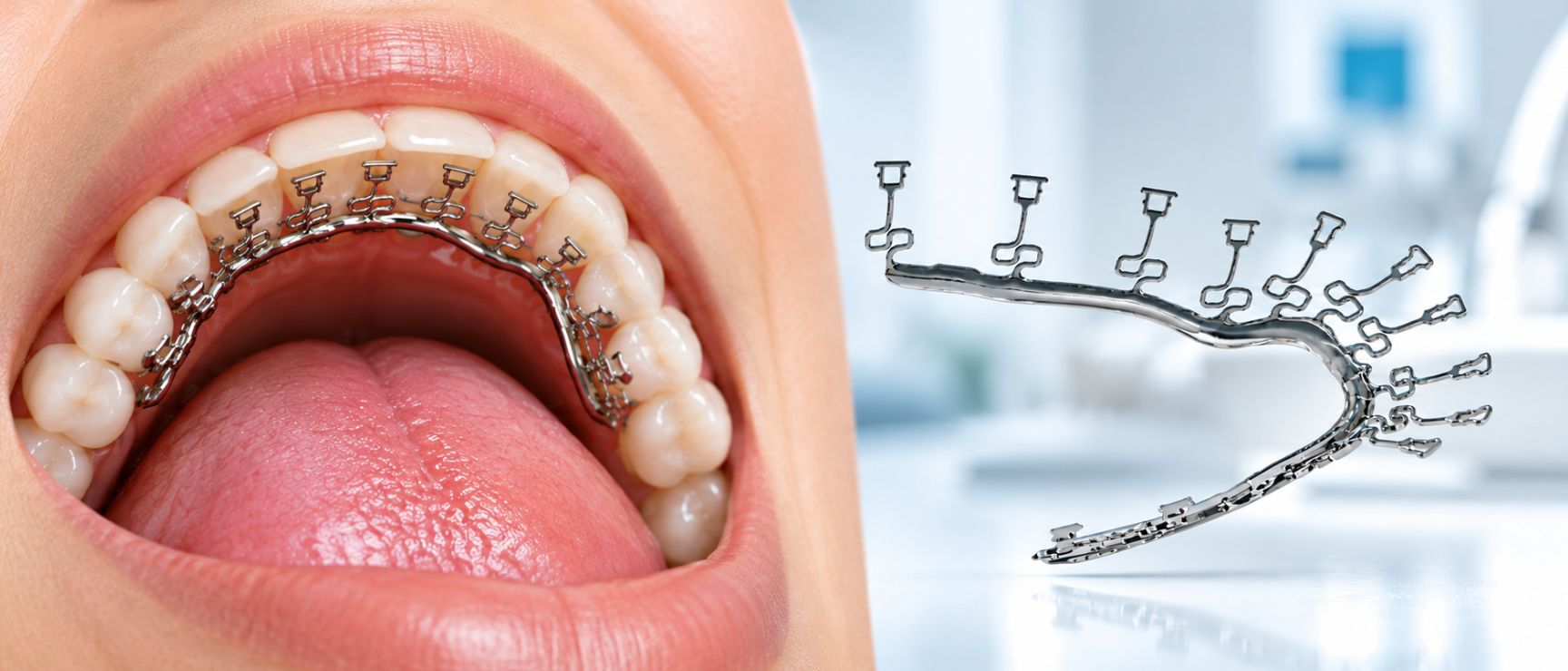
Brava® is fitted behind the teeth, keeping the appliance out of sight from the front.
That can be especially appealing to teenagers, professionals, and adults who don’t want orthodontic treatment visible when smiling, speaking, or being photographed.
Smooth, Rounded Components Designed With Patient Comfort in Mind
The Brava+ System includes smooth bracket surfaces, rounded contours, and a soft-coated anchorage base designed for tongue comfort.
That’s relevant because these components sit in the tongue’s working space.
But it’s important not to overstate the evidence: these comfort features do not prove that Brava prevents a lisp or eliminates speech adjustment.
How Independent Movers® Make Brava Different
Brava’s patented Independent Movers® allow individual teeth to follow doctor-prescribed movements, with multiple planned tooth movements able to occur simultaneously.
That’s an important Brava technology difference—but we should not connect Independent Movers® to reduced speech effects, because the available evidence doesn’t establish that relationship.
Ready to Explore Hidden Braces?
If your biggest hesitation about lingual braces is “Will I sound like myself?”, ask about it during your consultation.
A Brava provider can discuss your treatment needs, your work or school routine, upcoming speaking commitments, and what adjustment may realistically look like for you.
Frequently Asked Questions
Do Lingual Braces Affect Speech Permanently?
Speech changes from lingual braces are generally associated with the adjustment to having an appliance behind the teeth, but there is no single timeline for everyone. Many changes improve as patients adapt, while research shows that some sounds can take longer in some individuals.
Does Everyone Get a Lisp With Lingual Braces?
No. Some people develop a noticeable temporary lisp or altered “S” sound, while others notice little change. Individual anatomy, tongue habits, appliance design, and adaptation can all influence the experience.
Can You Practice Speaking Before Getting Lingual Braces?
You can familiarize yourself with reading or articulation exercises, but you can’t fully rehearse the changed tongue environment before the appliance is actually in place. Practice is likely to be more relevant once your tongue is adapting to the new surface.
Do Lingual Braces Affect Singing or Public Speaking?
They may temporarily affect articulation, which can matter to singers, speakers, teachers, performers, or anyone who relies heavily on clear speech. Lingual braces don’t act on your vocal cords; the concern is primarily how the tongue forms sounds inside the mouth. Direct research specifically on singing is limited, so discuss important performances or speaking commitments with your orthodontist before treatment.