
July 27 2026
“Effective” sounds like it should have one simple answer. It doesn’t. Clinical research treats clear aligners, ceramic braces, and fixed hidden braces very differently, and the honest answer depends on which one you mean, how complex your case is, and how much the system needs from you day to day.
What “Effective” Actually Means for Invisible Braces
Why the Answer Depends on Which Type You Choose:
Some research suggests aligners and fixed braces can both be effective overall, but may diverge on specific movements like torque control, occlusal contact, and arch width. Effectiveness isn’t binary; it’s task-specific.
Why It Depends on How Complex Your Case Is:
Fixed appliances, traditional, ceramic, or lingual, are generally considered the standard for complex malocclusion, valued for predictable control of difficult movements. Aligners are strongest for mild-to-moderate crowding and spacing issues; fixed systems are often preferred when rotations, vertical movement, or significant bite correction enter the picture.
Why It Depends on Whether the System Needs Your Daily Input:
Aligners are prescribed for 20–22 hours of daily wear, and because they’re removable, how consistently they’re worn plays a major role in the outcome. Fixed systems work continuously regardless of patient behavior.
How Effective Is Each Type, And for Which Cases?
| Type | Best Suited For | Daily Input Required |
|---|---|---|
| Clear Aligners | Mild–moderate cases | High, 20–22 hrs/day |
| Ceramic Braces | Moderate to complex cases, per case evaluation | None (fixed) |
| Hidden Braces (e.g. Brava) | Mild to complex cases, per case evaluation | None, works 24/7 |
Clear Aligners, Strong for Mild-to-Moderate Cases, Compliance-Dependent:
Research suggests aligners can be highly successful for mild-to-moderate cases when worn as directed, though real-world wear often falls short of the 20–22-hour prescription, which can affect outcomes. Aligners also have documented limits on certain movements, like canine/premolar rotation and torque expression, and may require a mid-course refinement more often than fixed systems to reach the planned result.
Ceramic Braces, Comparable to Metal, With a Trade-Off:
Ceramic brackets match metal braces in mild-to-moderate cases, using the same wire mechanics, but are less visible. Metal is generally preferred for severe cases needing heavy force.
Hidden Braces, The Same Capacity as Front-Mounted Fixed Appliances:
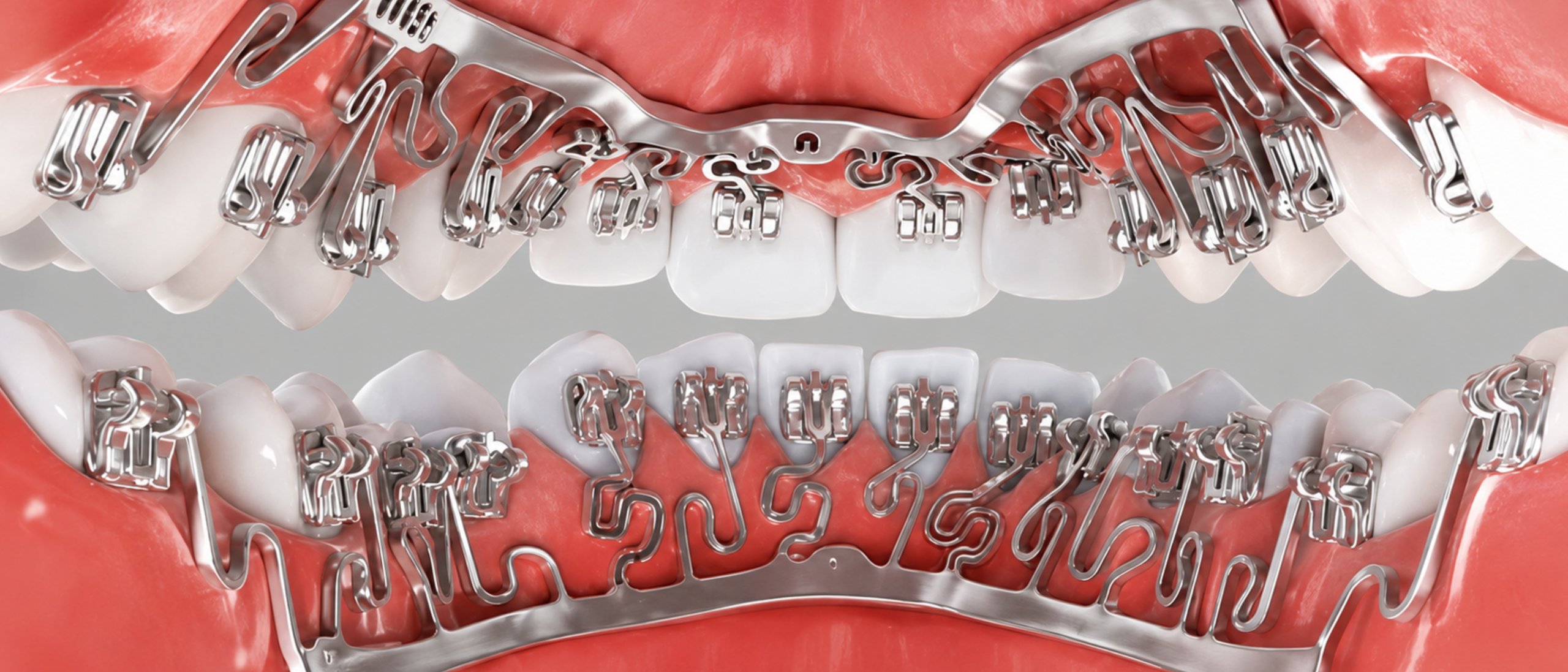
Lingual, behind-the-teeth systems are designed to align teeth using the same fixed-appliance mechanics as front-mounted braces. A provider can evaluate which specific conditions, such as crowding, spacing, overbite, crossbite, or rotations, are appropriate for treatment with a fixed system. Bonded in place, they work continuously without requiring the patient to wear or reinsert anything, though normal daily hygiene still applies.
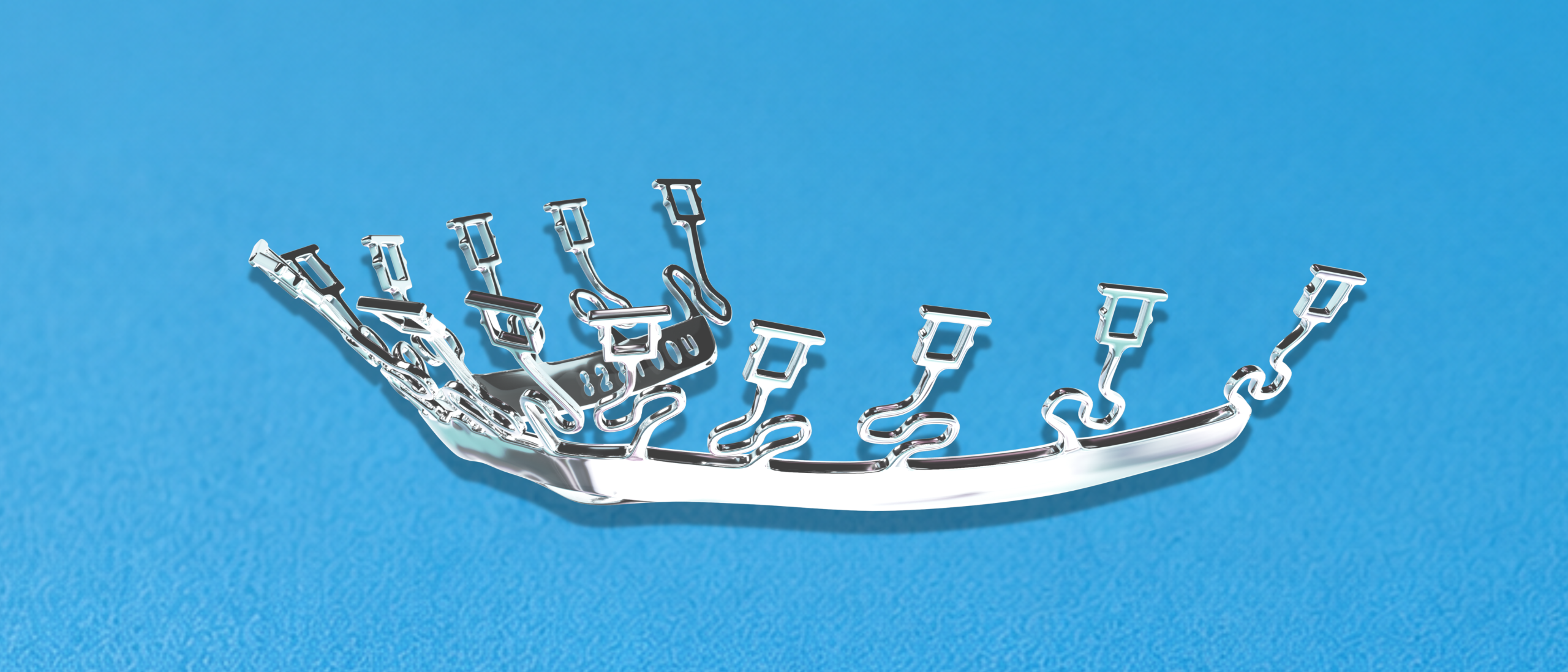
Brava’s Independent Mover™ technology moves each tooth individually via pre-programmed NiTi arms, applying force in all six degrees of freedom from day one. Brava typically requires 1–2 appliance stages and 4–6 visits over an estimated 6–12 months.
By condition: the right system often depends on the specific issue, whether it’s crowding, spacing, overbite, crossbite, or open bite, and how severe it is. In general, mild-to-moderate cases leave more systems on the table, while more complex or skeletal involvement tends to favor fixed appliances. An orthodontist can evaluate which system fits your specific diagnosis.
The Compliance Reality: Why Some Patients Get Better Results Than Others

What Real-World Compliance Data Shows:
The clinical prescription is 20–22 hours of daily aligner wear. Research using wear-time sensors has found that actual wear often falls meaningfully short of that prescription, with wide variation among patients, and that patients tend to wear aligners more consistently when they know their wear time is being monitored.
How Missing Hours Directly Affect Your Result:
Digital treatment plans calculate movement based on the prescribed wear schedule, so missed hours don’t just slow things down; they change the mechanical assumptions the plan was built on. That’s a common reason why aligner cases may need a mid-course refinement.
Sarina (26): “When I was in high school, I did Invisalign, but I was really bad about wearing my trays, and it just didn’t work for me. I also didn’t want regular braces, so I chose Brava.”
How Brava Hidden Braces Takes Effectiveness Further
The Only Treatment That Moves Teeth in All Directions at Once:
Brava’s Independent Mover™ technology uses pre-programmed NiTi arms connected to an anchorage base; each tooth moves independently rather than sharing a single archwire or tray, applying force in all six degrees of freedom, including torque, from day one.
Gently and Continuously, Always Working, Never Pausing:
Bonded and fixed, Brava works 24 hours a day without removal, reinsertion, or daily tray changes.
Moves Teeth Over Long Distances Without Monthly Adjustments:
Company data show most cases are completed in 1–2 stages, without the need for the many sequential trays aligner treatment often requires, and without monthly wire-tightening visits.
Why 77% of Parents Choose Brava for Their Teenagers:
Parents of teens prefer Brava over other treatment options 77% of the time.* For many parents, a fixed system that doesn’t require daily wear tracking is a meaningful advantage for adolescent patients.
Gary (59): “I had braces previously, so I was surprised how easy Brava was to adapt to. I love the quick results, and nobody knows I have braces unless I want to show them off!”
Is This the Right Treatment for You?
- What’s your specific concern?
Mild spacing or crowding leaves aligners viable; rotations or significant bite correction often point toward fixed options.
- How honest are you about your own compliance?
Real-world aligner wear often falls short of the full prescription, a useful, judgment-free question to weigh against your own routine.
- Is this right for your teenager?
A fixed system that doesn’t require daily wear tracking can be a meaningful advantage for adolescent patients.
- Are you an adult wondering if it’s too late?
There’s no upper age limit for treatment. Adults are more likely to need extra planning around existing dental work, which is a planning factor, not a barrier to treatment. Your provider can advise on what to expect for your case.
- What does your schedule allow?
Aligners and traditional braces typically run 12 or more visits; Brava is company-reported at 4–6 for the full course.
Take the Next Step
Effectiveness isn’t just about whether a system can work, it’s about whether it works for your case, your compliance, and your schedule. A Brava provider can assess your situation honestly and tell you what to expect.
Final Thoughts
Invisible braces are effective, but not identically, and not automatically. Aligners work well when the hours are actually worn; compliance, not the technology, is the biggest swing factor. Fixed systems remove the need to track daily wear and hold their own even on complex cases. Brava adds discreet placement and far fewer visits to that fixed-system reliability.
Frequently Asked Questions
Are Invisible Braces as Effective as Traditional Braces?
Research suggests fixed lingual systems can perform comparably to traditional braces in many cases, with aligners showing strong but sometimes slightly lower success rates, particularly as case complexity increases. Your provider can help you understand what to expect for your specific case.
Are Invisible Braces Effective for Complex Cases?
Fixed appliances are generally considered the standard for complex cases. Aligners are better suited to mild-to-moderate movements. Fixed hidden systems bridge the gap, offering fixed-appliance control without the visibility of traditional braces.
How Effective Are Invisible Braces for an Overbite?
The right approach depends on the specific issue and its severity. Mild-to-moderate overbite may be treatable with aligners using attachments and elastics, while anterior open bite and more severe cases often benefit from a fixed system’s added control. An orthodontist can evaluate what’s realistic for your case.
Are Invisible Braces Effective for Teenagers?
Yes, and compliance is often a bigger factor than age itself when it comes to teen treatment success. A fixed system that doesn’t require daily wear tracking can be an advantage for adolescent patients.
Are Invisible Braces Effective for Adults Over 40?
Yes, there’s no upper age limit for treatment. Adults are more likely to need extra planning around existing dental work, which is a planning factor, not a barrier to treatment. Your provider can advise on what to expect for your case.
How Does Brava Work Without Requiring Daily Patient Compliance?
The Brava system is fixed behind the teeth and works continuously from the moment it’s placed, with every tooth’s movement pre-programmed, removing the need to track daily wear. Patients still maintain normal daily hygiene throughout treatment.
What Should I Ask My Orthodontist Before Starting Invisible Braces?
Ask how your case complexity affects your options, what the realistic compliance ask is for each system, and how many visits and what cadence to expect.