

July 2 2026
Every type of brace available today can straighten teeth. That’s not the hard part. The hard part is choosing the one that actually fits your case, your lifestyle, and your patience for daily maintenance, because the “best” braces on paper aren’t always the best braces for you. This guide breaks the decision down into four factors, matches them to the four real types available, and shows where each one tends to land.
Why the Right Choice Matters More Than Most People Realize
What Happens When the Treatment Doesn’t Fit the Life:
A system that clashes with your routine doesn’t just feel inconvenient, it shows up in the result. Aligners left out too often, appointments skipped because they’re hard to fit in, all of it can quietly extend a timeline that was supposed to be predictable.
Why the Right Choice Makes the Whole Journey Easier:
When the system matches how you actually live, treatment stops being something you manage and becomes something that happens in the background. That’s the real goal of this framework, not just picking a type, but picking one you won’t have to fight for months on end.
The Four Factors That Should Drive Your Decision
Factor 1: How Complex Is Your Case?
Mild spacing or crowding keeps every option on the table. Rotations, significant bite correction, or larger movements narrow the field toward fixed systems built for precise, continuous control. As a reference point, most Brava cases are completed in approximately 6–12 months, typically in 1–2 stages. Treatment times vary by patient and case complexity.
Factor 2: How Important Is Visibility During Treatment?
Ceramic reduces visibility. Clear aligners are nearly invisible when worn. Only hidden, behind-the-teeth systems remove visibility from the equation.
Factor 3: How Realistic Is Daily Compliance for You?
Removable systems only work for the hours they’re actually worn. If 20+ hours a day is a genuine stretch for your routine, a fixed system removes the need to track wear time, rather than leaving the result dependent on it.
Factor 4: What Does Your Schedule and Budget Allow?
Cost varies by case complexity, provider, and location, and often correlates with the number of visits and length of treatment a system typically involves. A shorter timeline or fewer visits may offset a higher upfront investment for some patients; more visits at a lower cost per visit suit others just fine. Your provider can walk through what applies specifically to your case.
These four factors are yours to weigh, but they’re a starting point for a conversation, not a substitute for one. Bring your answers to a consultation and factor in your doctor’s recommendation for your specific case; they may see complexity or considerations in your bite and alignment that aren’t obvious from the outside.
The Four Types of Braces, What Each One Actually Offers
Traditional Metal Braces- Most Effective, Most Visible:
The long-standing standard for complex cases, offering reliable, well-understood control, at the cost of being the most visible option on the table.
Ceramic Braces- Less Visible, Same Mechanism:
Tooth-colored brackets use the same wire mechanics as metal braces, in a less visible form.
Clear Aligners- Nearly Invisible, Compliance-Dependent:
Strong for mild-to-moderate cases, but effectiveness depends heavily on actually wearing them 20–22 hours a day.
Hidden Braces- Invisible and Fixed:
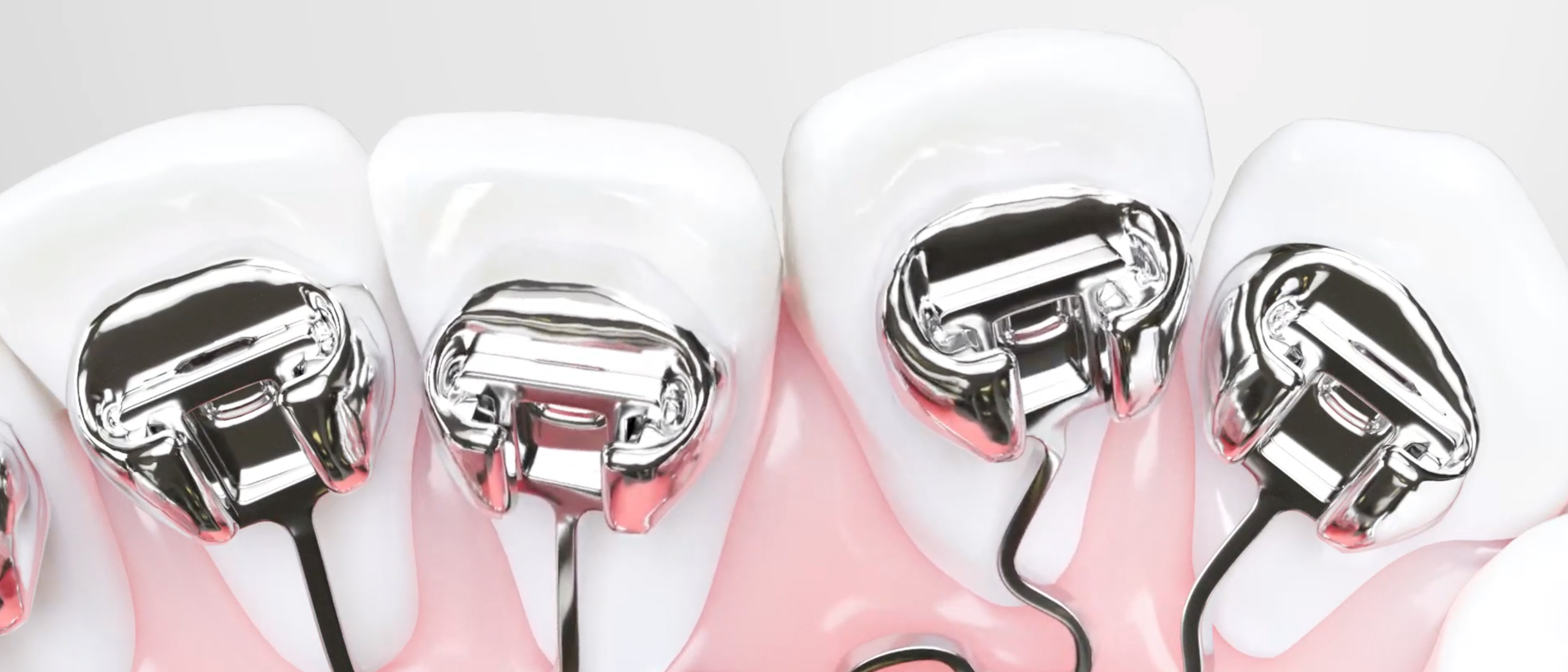
Bonded behind the teeth, hidden systems are designed to align teeth without depending on the patient to wear or reinsert an appliance. Patients still maintain normal daily hygiene, like brushing and flossing.
Matching Your Answers to the Right Type
If Your Case Involves Heavy Bite Correction or Complex Alignment:
Fixed systems, ceramic, metal, or hidden, generally outperform aligners here, since continuous force isn’t limited by daily wear.
If Visibility Is Your Biggest Concern:
Hidden braces remove visibility from the front of the mouth, where it matters most day to day. Helen (24): “I am a physical therapist, and having metal on the outside with traditional braces seemed a bit intimidating. That’s why I went forward with Brava!”
If Compliance Is a Real Worry:
A fixed system removes the variable rather than asking you to manage it. David (29): “I try to eat 6 meals a day, so this sounded like the better option for me and offered less hassle.”
If You Want Fewer Appointments and Faster Results:
Company-reported figures put Brava at 4–6 total visits and 6–12 months, versus 8–12 visits for traditional braces and 12 or more for aligners, both typically spanning 18–24 months.
How to Choose Braces for Your Teenager
Why Teens Are Ideal Candidates Biologically:
Active jaw growth during adolescence makes tooth movement more efficient at this age than almost any other.
Why Compliance Changes the Decision for Teenagers:
Aligner success depends on a teen consistently wearing trays for 20+ hours a day, a burden that often falls on parents to monitor as much as the teen to follow.
Why 77% of Parents Choose Brava for Their Teenager:
For most parents, the real worry isn’t whether braces will work, it’s whether their teen will actually stick with the daily routine an aligner demands. A fixed system removes that variable entirely, which is likely why, per Brava’s own data, parents of teens choose Brava over other options 77% of the time.*
Where Brava Hidden Braces Fit the Framework
The Only Treatment That Moves Teeth in All Directions at Once:
Brava’s Independent Mover™ technology programs each tooth to move independently and simultaneously, applying force in all six degrees of freedom from day one.
Nothing to Remove, Nothing to Forget, Built for Real Life:
Bonded in place, Brava is designed to work continuously with nothing to remove, reinsert, or track. Patients still maintain normal daily hygiene as part of treatment.
Digitally-Driven Planning:
A personalized smile design is mapped from a digital scan before treatment begins, so every tooth’s path is planned.
What to Ask at Your Consultation Before Deciding

Questions About Your Case:
How complex is my alignment or bite issue? Which types would realistically work for it, and which would be a stretch?
Questions About the Treatment Experience:
How many visits should I expect, and how far apart? What does daily maintenance actually look like for each option I’m considering?
Questions About Brava Specifically:
Is my case a good fit for a fixed hidden system? What would the adjustment period involve, and how soon would I notice movement?
Take the Next Step
Choosing braces isn’t about finding the single “best” option, it’s about finding the one that fits your case, your lifestyle, and your patience. A Brava provider can walk through your specific answers and help you decide.
Final Thoughts
There’s no universally “right” set of braces, only the right set of braces for your specific case, your visibility preference, your honest compliance level, and your schedule. Work through the four factors, match them honestly against the four types above, and the decision tends to make itself.
Frequently Asked Questions
How Do I Know Which Type of Braces Is Right for Me?
Work through case complexity, how much visibility matters to you, how realistic daily compliance is, and what your schedule allows, then discuss those answers with an orthodontist who can assess your specific case.
Can I Choose My Own Braces or Does the Orthodontist Decide?
It’s a joint decision. You bring your preferences on visibility, compliance, and schedule; your orthodontist confirms which types are clinically appropriate for your case complexity.
Which Braces Are Least Visible?
Hidden, behind-the-teeth systems like Brava are the least visible orthodontic treatment. Clear aligners are nearly invisible when worn but visible when removed and up close; ceramic braces are less visible than metal.
How Do I Choose Between Clear Aligners and Hidden Braces?
It largely comes down to lifestyle. Compliance is part of that: does your routine allow you to remember to wear aligners 20+ hours a day, remove them each time you eat or drink anything other than water, and fit in more frequent orthodontist visits than you would with Brava?
Which Braces Are Best for Adults?
Adults often prioritize discretion and efficiency, which can make hidden braces a strong fit for some, no visible appliance from the front, and fewer visits to work around a busy schedule. An orthodontist can confirm whether it’s the right fit for your case.
What Makes Brava Hidden Braces Different From Other Options?
Brava® uses patented Independent Mover™ technology to move each tooth independently and simultaneously from day one, completing most cases in 6–12 months.
How Do I Find a Brava Provider Near Me?
Click the link below to find a provider near you. Find a Brava Provider →