
Aug 24 2026
Maybe your dentist just told you that your teenager has an overbite. Maybe you’ve always noticed that your upper teeth cover most of your lower teeth when you smile. Or maybe you’re an adult wondering whether the bite you’ve lived with for years can still be corrected.
The question is the same: can braces fix an overbite?
Yes, braces can correct many overbites. And having an overbite doesn’t automatically mean pushing your upper teeth backward or needing jaw surgery.
What treatment looks like depends on why your teeth overlap in the first place. Sometimes the front teeth need to move vertically. Sometimes the back teeth are part of the correction. Sometimes several teeth need different movements at the same time.
What looks like one problem in the mirror can have several very different solutions.
What Is an Overbite—and How Is It Different From Overjet?
Close your teeth naturally. Your upper front teeth should overlap your lower front teeth slightly. That vertical overlap is normal.
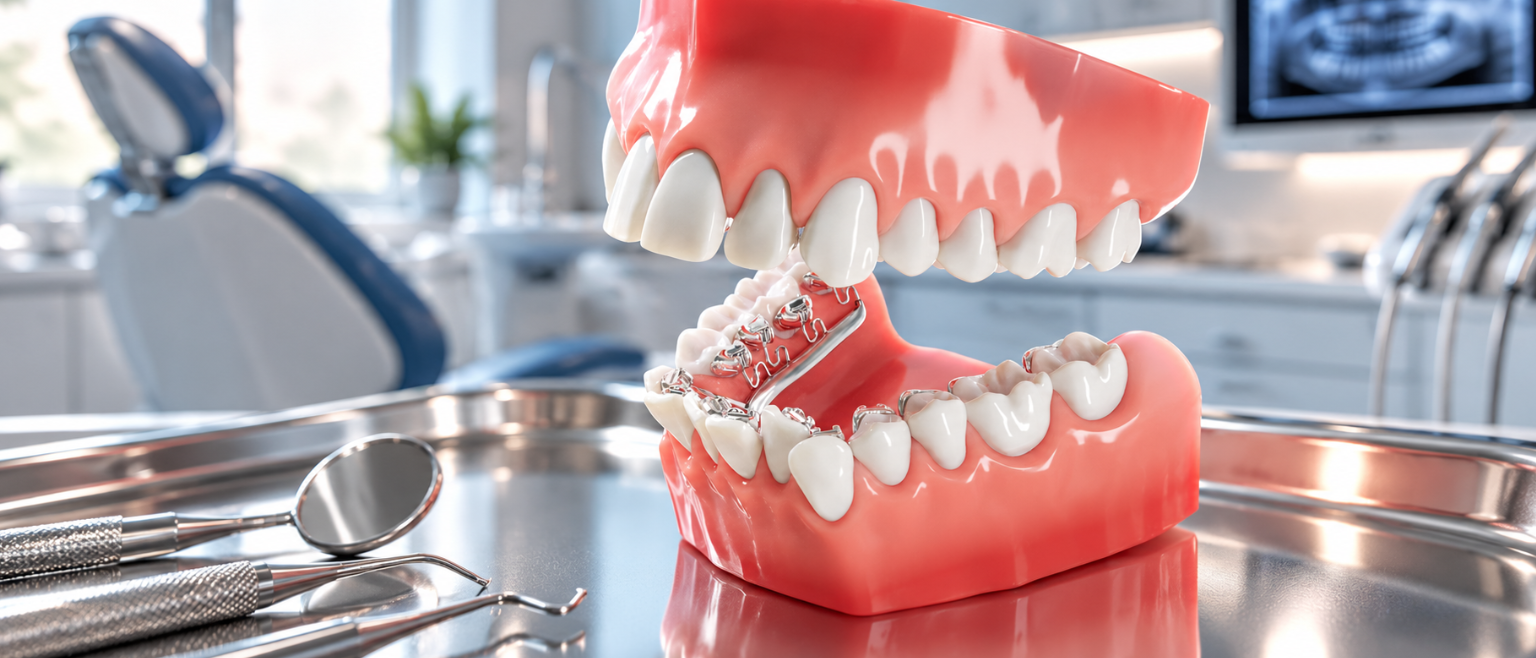
An overbite describes how far the upper front teeth overlap the lower front teeth vertically. When that overlap becomes excessive, it is commonly referred to as a deep overbite or deep bite.
For some people, it’s easy to notice because very little of the lower front teeth shows when they bite down. For others, their dentist or orthodontist may notice it first.
When Does Normal Vertical Overlap Become a Deep Overbite?
No single measurement tells every patient whether their bite needs treatment.
A U.S. population study of more than 7,000 people found an average overbite of 2.9 mm, while about 8% had an overbite of 6 mm or more.
But orthodontists don’t look at the number alone. They also consider how much of the lower front teeth are covered, how the upper and lower teeth meet, whether there is unusual tooth wear, and what is causing the excessive overlap.
Research has also found an association between deep bite and dental attrition, or tooth wear. That doesn’t mean every deep bite will damage your teeth. It means the amount of overlap is only one part of deciding whether treatment may be appropriate.
Overbite vs. Overjet—What’s the Difference?
Overbite and overjet are often confused, but they describe problems in two different directions.
| Overbite | Overjet | |
| Direction | Vertical | Horizontal |
| What you see | Upper front teeth cover too much of the lower front teeth | Upper front teeth sit too far in front of the lower front teeth |
| Think of it as | Too much overlap | Too much forward projection |
Cleveland Clinic also distinguishes overbite from overjet based on vertical versus horizontal alignment.
You can have a deep overbite without excessive overjet, or you can have both at the same time.
That distinction matters because the type of bite problem helps determine the direction in which the teeth may need to move. So before assuming that overbite treatment means pushing the upper teeth backward, it’s important to know which problem is actually being corrected.
Can Braces Fix an Overbite by Moving Different Teeth?
Yes. But fixing an overbite doesn’t mean every patient gets the same tooth movements.
Depending on what’s creating the overlap, your orthodontist may need to:
- Move certain front teeth vertically to reduce how deeply they overlap.
- Change the vertical position of back teeth to help open the bite at the front.
- Change the position or angle of individual teeth so they meet differently.
- Coordinate several movements together across the upper and lower teeth.
So the more useful question isn’t simply, “Can braces fix my overbite?”
It’s “What needs to move to fix my overbite?”
Does Fixing an Overbite Mean Moving the Upper Teeth Back?
Not necessarily.
This is where the difference between overbite and overjet becomes practical.
If excessive overjet is also present, your orthodontist may need to change the forward-backward position or angle of certain teeth. But if the main problem is a deep overbite, simply moving the upper teeth backward may not address what’s creating the excessive vertical overlap.
Instead, treatment may involve changing the vertical position of selected front teeth, back teeth, or both.
The direction of tooth movement has to match the reason the bite is deep.
Moving the Front Teeth Vertically
Sometimes selected front teeth need to move vertically to reduce excessive overlap.
One way orthodontists do this is through a movement called intrusion. Put simply, the front tooth moves vertically farther into its supporting bone, reducing how deeply it extends into the bite.
Which front teeth need to move—and by how much—depends on the individual case. The movement might involve upper front teeth, lower front teeth, or a combination.
That’s why this type of vertical movement isn’t a standard prescription for every overbite. Your orthodontist first has to determine which teeth are contributing to the excessive overlap.
Changing the Vertical Position of the Back Teeth
Here’s the surprising part:
Sometimes correcting the front of your bite means moving the back teeth.
Your front and back teeth work together when you close your mouth. In appropriate cases, allowing certain premolars or molars to move farther into the bite can create more separation at the front and reduce the deep overlap.
Orthodontists call this type of outward vertical movement posterior extrusion.
So if your orthodontist talks about moving back teeth when the problem you can see is at the front, those two things aren’t unrelated.
Changing the back of the bite can change what happens at the front.
Whether this movement is appropriate depends on the bite, facial pattern, and overall treatment plan.
Combining Different Movements to Correct the Bite
For many patients, the answer isn’t front teeth or back teeth. It can be both, along with other planned movements.
A treatment plan might involve:
- Front teeth: vertical movement
- Back teeth: vertical adjustment
- Individual teeth: changes in position or angle
- Upper and lower teeth: better coordination when biting
That is why two people who both say, “I have an overbite,” can receive very different treatment plans.
The diagnosis tells you what the problem is. The treatment plan tells you what has to move.
That need for different, carefully planned tooth movements is also where the treatment system matters.
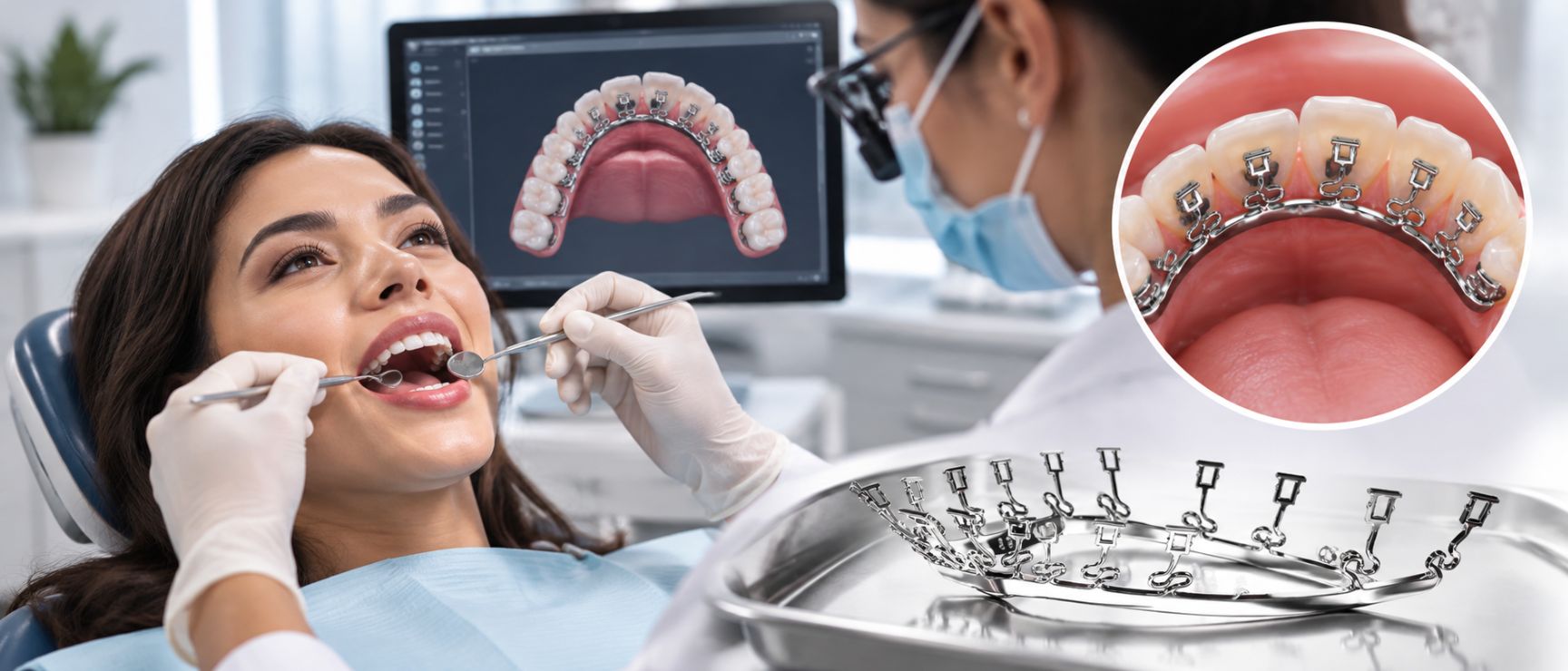
Brava® Hidden Braces takes an individualized approach to tooth movement using Independent Movers® behind the teeth. We’ll explain how that works—and why it can matter when different teeth need different movements—below.
Why Don’t All Overbites Need the Same Tooth Movements?
An overbite describes what the bite looks like, but it doesn’t necessarily explain why it looks that way.
For one patient, excessive overlap may mainly come from the position of the teeth. For another, the relationship between the upper and lower jaws may contribute. Some patients have a combination of both.
That distinction can completely change the treatment plan.
When Tooth Position Is the Main Problem
Sometimes the excessive overlap comes primarily from how the teeth are positioned within the jaws, rather than from a major mismatch between the jaws themselves.
Orthodontists may call this a dental deep bite, or a dentoalveolar deep bite.
To understand whether that’s the case, your orthodontist looks at how the front teeth are positioned and angled, the shape and level of the dental arches, how the back teeth support the bite, and how the upper and lower teeth relate when you close your mouth.
Why does that distinction matter?
Because when tooth position is the main driver, orthodontic tooth movement can directly target the areas creating the deep bite. When the underlying jaw relationship is a major contributor, treatment planning has to account for that too.
So the question isn’t only:
“How much overbite do I have?”
It’s also:
“Is the excessive overlap coming mainly from my teeth, my jaw relationship, or both?”
That answer helps determine what orthodontic correction needs to accomplish.
When Jaw Relationships Contribute
Sometimes the teeth aren’t the whole story.
The relationship between the upper and lower jaws can also contribute to how deeply the front teeth overlap. Orthodontists may describe this as a skeletal component, meaning the jaw relationship itself is contributing to the bite.
If you’re a parent hearing this about your teenager—or an adult who has lived with a deep bite for years—the word skeletal can sound more alarming than it needs to.
A skeletal component does not automatically mean surgery.
Your orthodontist first evaluates how much correction can be achieved through tooth movement. In severe adult cases with a substantial jaw discrepancy, corrective jaw surgery may be considered alongside orthodontic treatment.
The important point is that the source and severity of the jaw contribution help determine what treatment can realistically accomplish.
How Age and Growth Affect Treatment Planning
Parents often ask, “Should we treat my teenager’s overbite now, or should we wait?”
Adults often ask the opposite: “Have I waited too long?”
Age alone doesn’t answer either question.
Children and teenagers may still have facial and jaw growth remaining, which can influence when and how an orthodontist plans treatment.
Adults have completed jaw growth, but that doesn’t mean an overbite can no longer be corrected. Many adult deep bites can still be treated through orthodontic tooth movement. The orthodontist simply plans within an established jaw structure.
If you’re exploring treatment for your child, read our Braces for Teenagers Guide. Adults can learn more in our Invisible Braces for Adults Guide.
How Do Braces Create the Movements Needed to Correct a Deep Bite?
Once your orthodontist knows what needs to move, the next question is how to make those movements happen.
Braces apply controlled orthodontic forces that gradually guide teeth toward their planned positions.
Brackets, Archwires, and Controlled Orthodontic Forces
Traditional braces use brackets connected by an archwire to apply controlled forces and guide teeth toward planned positions.
For deep-bite correction, those forces may need to do more than make a tooth look straight. Depending on the treatment plan, the orthodontist may also need to control how high or low a tooth sits, its angle and rotation, and how the upper and lower teeth work together.
In other words, correcting an overbite requires carefully planned tooth movement in different directions—not simply lining up the visible front teeth.
Later in treatment, your orthodontist evaluates both the alignment and how the completed bite comes together.
When Elastics or Additional Mechanics Are Needed
If your orthodontist mentions elastics or additional bite-correction mechanics, you may wonder whether your case is unusually difficult.
Not necessarily.
Elastics can help coordinate the relationship between the upper and lower teeth. Depending on the case, orthodontists may also use other techniques or appliances to help open the bite or provide the support needed for a particular tooth movement.
Some patients need them. Others don’t.
The mechanics follow what your bite needs—not simply the fact that you have an overbite.
Can Clear Aligners Correct a Deep Overbite Too?
Yes, clear aligners can correct some deep overbites. Whether they’re appropriate depends on the severity of the bite and, importantly, the movements needed to correct it.
Research suggests clear aligners can correct some mild-to-moderate dental deep bites, but planned vertical movements can be less predictable. Complex movements may require additional aligner stages or other mechanics, which can lengthen a treatment plan. Brava hidden braces offer a fixed alternative, and your orthodontist can compare the expected timelines for your bite.
So if you’re choosing aligners because you don’t want visible braces, there’s another question worth asking:
Are removable trays my only discreet option?
No.
Brava® Hidden Braces is a fixed orthodontic system placed behind the teeth, so treatment remains hidden from the front without relying on remembering to wear removable trays throughout the day.
For a deeper look at invisible orthodontic options, read Are Invisible Braces Effective?.
How Does Brava® Approach Tooth Movement Differently?
By now, one thing should be clear: correcting an overbite can require different teeth to do different things.
That’s where Brava® differs from conventional braces.
Independent Movers® for Individual Tooth Movement
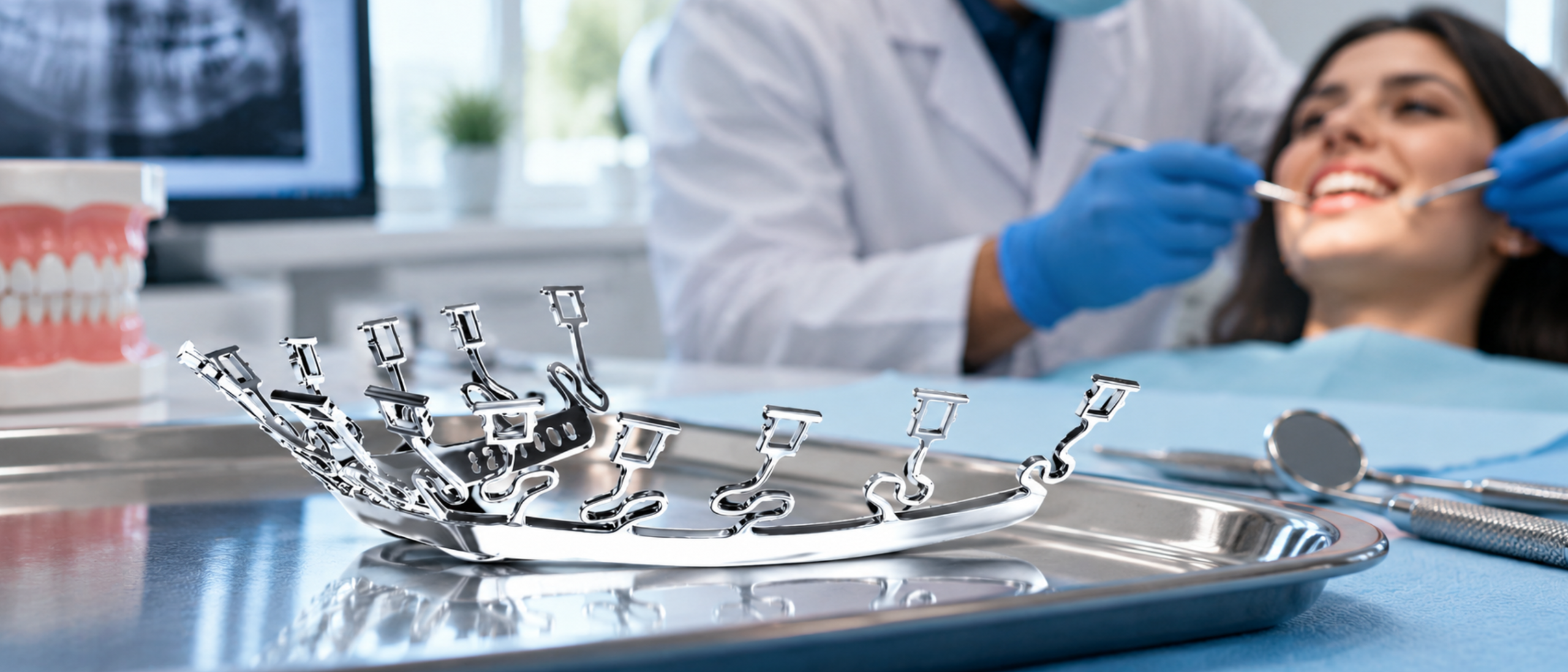
Brava® uses patented Independent Movers®. Each tooth connects to its own pre-programmed shape-memory arm designed around the movement prescribed for that individual tooth.
Instead of every tooth depending on the same continuous archwire, the system provides an individual connection between the anchorage base and each tooth.
For a treatment plan where one tooth may need to move vertically while another needs to change its position or angle, that design allows the prescribed movements to be planned tooth by tooth.
Different teeth can have different jobs.
Digitally Planned Tooth Movements
Before treatment begins, your doctor digitally plans the intended tooth movements and positions. Brava® is then customized around that doctor-approved plan.
The movements are programmed into the appliance during manufacturing, so each Independent Mover® is designed around the planned destination and movement of its tooth.
For the patient, the important point is simple: the appliance is built around an individualized treatment plan rather than a one-size-fits-all sequence of movements.
Independent and Simultaneous Planned Movement
Brava® Independent Movers® are designed so individual teeth can move independently while multiple prescribed movements occur simultaneously.
The system controls how each tooth moves in different directions, including vertical movement, rotation, and changes in tooth angle. Brava+ is also designed to level the natural curve formed by the teeth, known orthodontically as the Curve of Spee, which can be relevant in some deep-bite treatment plans.
This doesn’t mean every overbite receives the same Brava® plan.
It means the opposite.
Your bite determines the movements. The movements determine the plan.
Hidden Placement Behind the Teeth
Another part of treatment matters to patients just as much as the mechanics: Will people see my braces?
Brava® Hidden Braces are placed behind the teeth, keeping the appliance hidden from the front.
For a teenager who doesn’t want braces showing in every photo, an adult who spends the day meeting clients, or anyone who simply prefers discreet treatment, that can make fixed orthodontic treatment feel very different.
Because Brava® Hidden Braces are fixed, there are also no removable trays or daily tray-wear hours to remember.
How Do Orthodontists Know an Overbite Is Actually Corrected?
You may look in the mirror and think, My teeth look straight now—does that mean my overbite is fixed?
Not necessarily.
Your orthodontist is looking at three important things:
- Has the excessive vertical overlap been reduced?
- Do the upper and lower teeth meet according to the treatment plan?
- Has the bite improved along with the alignment?
Measuring Vertical Overlap
One of the clearest checks is how much the upper front teeth overlap the lower front teeth.
Your orthodontist can compare that relationship before, during, and after treatment to see how the deep bite is changing.
But a smaller measurement alone doesn’t tell the whole story.
Evaluating How the Upper and Lower Teeth Meet
Your orthodontist also checks how the upper and lower teeth contact when you bite down. Orthodontists call this occlusion.
They evaluate the relationship between the upper and lower teeth and how the bite comes together, not just how the front teeth look in a smile.
That’s why a straight-on photograph can’t tell the whole story about whether an overbite has been corrected.
Looking Beyond Straight Teeth to Bite Function
Here’s the easiest way to understand the difference:
| Straightening | Bite Correction |
| Where are the individual teeth? | How do the upper and lower teeth meet? |
| Do the teeth look aligned? | Has the excessive overlap been corrected as planned? |
| Focuses on tooth position | Considers the relationship between the upper and lower teeth |
You need both parts of the picture.
Your smile shows the alignment. What happens when you bite down shows whether the bite itself has been corrected as planned.
Take the Next Step Toward Correcting Your Bite
So, can braces fix an overbite? Yes, many overbites can be corrected orthodontically.
The next step isn’t guessing whether your front teeth need to move backward, upward, or in some other direction. It’s finding out what is actually creating your deep bite and what movements your case requires.
If you want to explore a fixed treatment that works behind your teeth rather than across the front of your smile, a Brava provider can evaluate your bite and determine whether Brava® Hidden Braces is appropriate for you.
Frequently Asked Questions
Can Braces Fix an Overbite Without Surgery?
Yes, many overbites can be corrected with braces without surgery. When tooth position is the main problem, orthodontic movement may be enough. Surgery is generally considered when a significant difference in the jaw relationship is involved, and tooth movement alone cannot achieve the planned correction.
Can Braces Completely Fix an Overbite?
Many overbites can be corrected orthodontically, but the achievable result depends on the individual bite. Severity, tooth position, jaw relationships, age, and the movements required all influence treatment planning. An orthodontic evaluation is needed to determine what correction is possible in your case.
Can Braces Fix a Severe Overbite?
Yes, braces can be part of treatment for a severe overbite. Some cases require additional orthodontic techniques or appliances. When a severe overbite is strongly influenced by the underlying jaw relationship, orthodontic treatment may sometimes be combined with corrective jaw surgery.
Can Adults Get an Overbite Fixed With Braces?
Yes. Adults can have many overbites corrected with braces. Because adult jaw growth is complete, treatment planning focuses on what can be achieved through tooth movement within the existing jaw structure and whether the jaw relationship also needs to be considered.
How Long Does It Take Braces to Fix an Overbite?
There isn’t one treatment time for every overbite. How long correction takes depends on the depth and cause of the overbite, which teeth need to move, the complexity of those movements, and whether other alignment or bite problems are being corrected at the same time.
After evaluating your individual bite, your orthodontist can give you a meaningful timeline.